“Is there a Korean skincare manufacturer that can do an MOQ of 500 units for a Korean Skincare Private Label?”
This is arguably the most frequent question I receive from early-stage beauty brands. Whether it is 500 units, 1,000 units, or a “safe” starting point of 3,000 units, the obsession with Low Minimum Order Quantities (MOQ) is a hallmark of the modern beauty startup. I understand the concern—holding inventory feels like a high-stakes risk, especially when you are just testing the waters.
For these reasons, it is crucial to consider a Korean Skincare Private Label strategy.
Founders spend weeks digging through lists of Korean cosmetic manufacturers, desperately searching for a partner willing to take on small batches. To be clear: those manufacturers exist. But as a strategic partner in the beauty industry, I have to ask a much more important question: It might be possible, but is it a viable business?
1. The Myth of the 3,000-Unit Safety Net in Korean Skincare Private Label
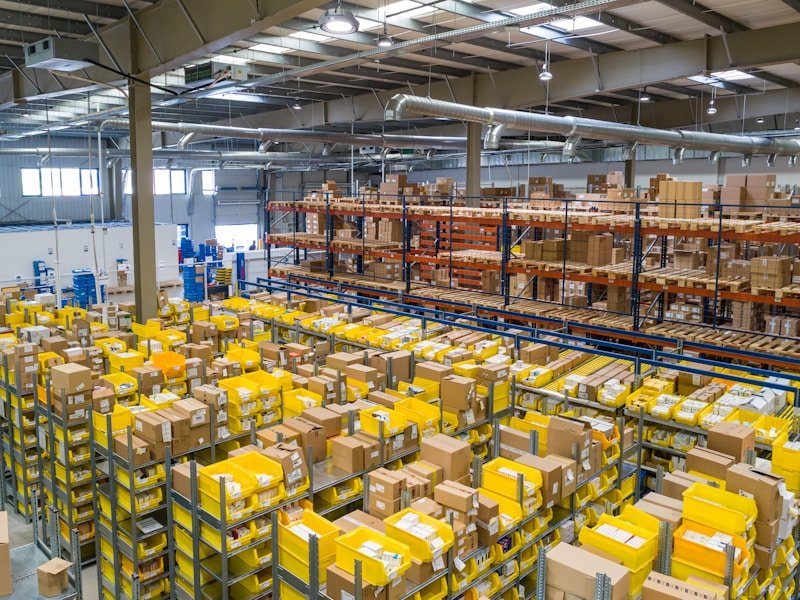
Many entrepreneurs assume that 3,000 units is the perfect middle ground between risk and scale. However, in the reality of skincare manufacturing, 3,000 units often leave almost zero margin for the factory.
When you factor in line setup, labor, rigorous testing, and overhead, a 3,000-unit run is closer to an “investment batch” than a profitable one for the manufacturer. This is why established, high-tier Korean beauty products manufacturers rarely welcome 3,000-unit orders. In practice, 5,000 units is the actual baseline for sustainable, professional production. If you are looking for long-term stability and quality, you must understand the factory’s perspective on profitability.
2. The Hidden Cost of Small-Batch Customization
Cosmetic manufacturing costs are not driven by the formula alone. Whether you are working with a makeup manufacturer or a specialized skincare lab, the fixed upfront costs are the real killers of small-batch dreams.
- Raw Material Minimums: Suppliers of high-end active ingredients often have their own MOQs.
- Components & Packaging: Labels, boxes, pumps, and custom caps have fixed setup costs.
- Line Setup: The time it takes to clean and calibrate a production line for 500 units is the same as for 10,000 units.
When these fixed costs are spread across a tiny quantity, your unit cost rises sharply. This is why small-batch custom production rarely makes financial sense. You end up with a product that is too expensive to market effectively, leaving you with no budget for the actual growth of the brand.
3. When to Choose a Korean Skincare Private Label Structure
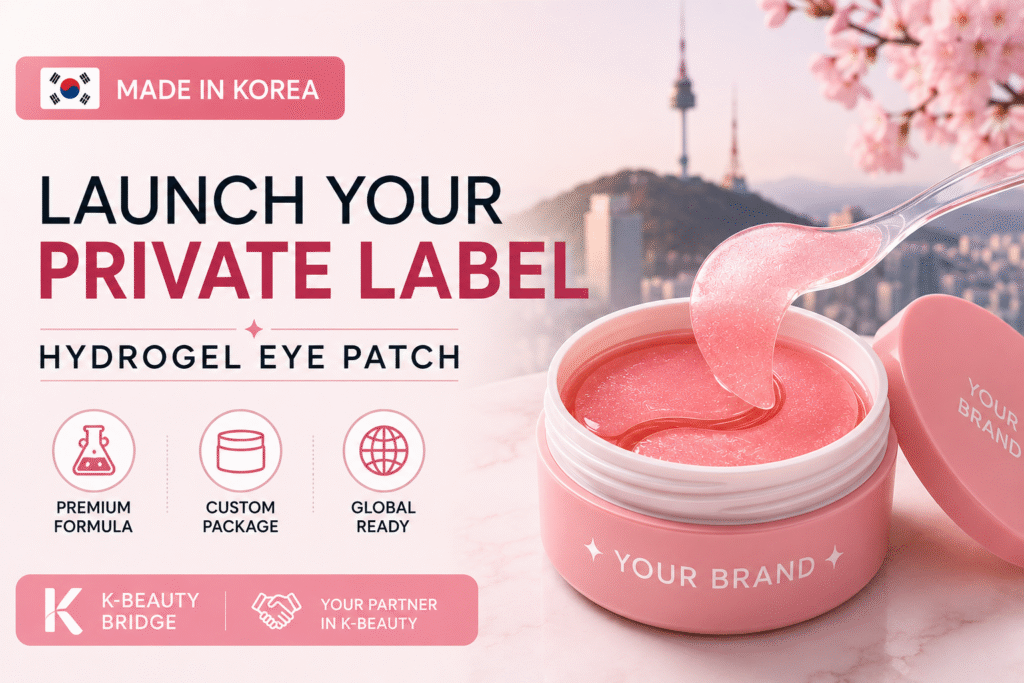
If your absolute priority is a very low MOQ and immediate production, a fully custom formulation is usually the wrong path. In these cases, the only structure that consistently works is a Korean skincare private label approach.
Choosing a private label means using an existing, pre-developed formula and simply applying your branding and packaging. This is not a “shortcut” or a sign of a lesser brand; it is often the only financially viable structure for small volumes. A reputable Korean skincare supplier can offer high-quality, market-proven formulas that allow you to enter the market without the R&D costs of custom manufacturing. However, if your goal is to build a unique, enterprise-level brand, you must eventually graduate to the 5,000+ unit scale.
4. The Real Issue: Is it the MOQ or the Business Model?
As a strategic K-beauty supplier, I often challenge my clients to look past the numbers. 500 or 1,000 units might be physically possible. 3,000 units might be a break-even point. But 5,000 units is where sustainable business begins.
The real question you should be asking isn’t “Who can do 500 units?” but rather: “Can this product and brand survive when produced at a 5,000-unit scale?”
If the answer is no, lowering the MOQ will not fix your problem. You will simply get stuck at the same point a few months later, out of cash and out of options. In most cases, MOQ isn’t the obstacle—the underlying business model is. Professional Korean cosmetic manufacturers look for partners who understand this math. They want to work with brands that are built for scale, not just for survival.
5. Partnering for Professional Scale
Building a successful brand in the K-beauty ecosystem requires a bridge between your creative vision and the industrial reality of manufacturing. Whether you are looking for a skincare manufacturer for a custom project or navigating the world of makeup manufacturers, success comes down to unit economics.
At K-Beauty Bridge, we help established brands and serious entrepreneurs navigate these complexities. We don’t just find you a factory; we help you build a supply chain that actually works for your bottom line.
Conclusion: Stop Searching for Low MOQ, Start Building for Scale
“Is there a Korean skincare manufacturer that can do an MOQ of 500 units?”
This is arguably the most frequent question I receive from early-stage beauty brands. Whether it is 500 units, 1,000 units, or a “safe” starting point of 3,000 units, the obsession with Low Minimum Order Quantities (MOQ) is a hallmark of the modern beauty startup. I understand the concern—holding inventory feels like a high-stakes risk, especially when you are just testing the waters.
Founders spend weeks digging through lists of Korean cosmetic manufacturers, desperately searching for a partner willing to take on small batches. To be clear: those manufacturers exist. But as a strategic partner in the beauty industry, I have to ask a much more important question: It might be possible, but is it a viable business?
1. The Myth of the 3,000-Unit Safety Net
Many entrepreneurs assume that 3,000 units is the perfect middle ground between risk and scale. However, in the reality of skincare manufacturing, 3,000 units often leave almost zero margin for the factory.
When you factor in line setup, labor, rigorous testing, and overhead, a 3,000-unit run is closer to an “investment batch” than a profitable one for the manufacturer. This is why established, high-tier Korean beauty products manufacturers rarely welcome 3,000-unit orders. In practice, 5,000 units is the actual baseline for sustainable, professional production. If you are looking for long-term stability and quality, you must understand the factory’s perspective on profitability.
2. The Hidden Cost of Small-Batch Customization
Cosmetic manufacturing costs are not driven by the formula alone. Whether you are working with a makeup manufacturer or a specialized skincare lab, the fixed upfront costs are the real killers of small-batch dreams.
- Raw Material Minimums: Suppliers of high-end active ingredients often have their own MOQs.
- Components & Packaging: Labels, boxes, pumps, and custom caps have fixed setup costs.
- Line Setup: The time it takes to clean and calibrate a production line for 500 units is the same as for 10,000 units.
When these fixed costs are spread across a tiny quantity, your unit cost rises sharply. This is why small-batch custom production rarely makes financial sense. You end up with a product that is too expensive to market effectively, leaving you with no budget for the actual growth of the brand.
3. When to Choose a Korean Skincare Private Label Structure
If your absolute priority is a very low MOQ and immediate production, a fully custom formulation is usually the wrong path. In these cases, the only structure that consistently works is a Korean skincare private label approach.
Choosing a private label means using an existing, pre-developed formula and simply applying your branding and packaging. This is not a “shortcut” or a sign of a lesser brand; it is often the only financially viable structure for small volumes. A reputable Korean skincare supplier can offer high-quality, market-proven formulas that allow you to enter the market without the R&D costs of custom manufacturing. However, if your goal is to build a unique, enterprise-level brand, you must eventually graduate to the 5,000+ unit scale.
4. The Real Issue: Is it the MOQ or the Business Model?
As a strategic K-beauty supplier, I often challenge my clients to look past the numbers. 500 or 1,000 units might be physically possible. 3,000 units might be a break-even point. But 5,000 units is where sustainable business begins.
The real question you should be asking isn’t “Who can do 500 units?” but rather: “Can this product and brand survive when produced at a 5,000-unit scale?”
If the answer is no, lowering the MOQ will not fix your problem. You will simply get stuck at the same point a few months later, out of cash and out of options. In most cases, MOQ isn’t the obstacle—the underlying business model is. Professional Korean cosmetic manufacturers look for partners who understand this math. They want to work with brands that are built for scale, not just for survival.
5. Partnering for Professional Scale
Building a successful brand in the K-beauty ecosystem requires a bridge between your creative vision and the industrial reality of manufacturing. Whether you are looking for a skincare manufacturer for a custom project or navigating the world of makeup manufacturers, success comes down to unit economics.
At K-Beauty Bridge, we help established brands and serious entrepreneurs navigate these complexities. We don’t just find you a factory; we help you build a supply chain that actually works for your bottom line.
Conclusion: Stop Searching for Low MOQ, Start Building for Scale
If you are tired of being rejected by top-tier factories due to volume, it might be time to re-evaluate your production strategy. High-tier Korean skincare manufacturers value partners who understand the value of scale.
Ready to move beyond small-batch struggles and build a professional K-beauty brand?
contact – Korean Skincare Manufacturers & Private Label Sourcing | K-Beauty Bridge