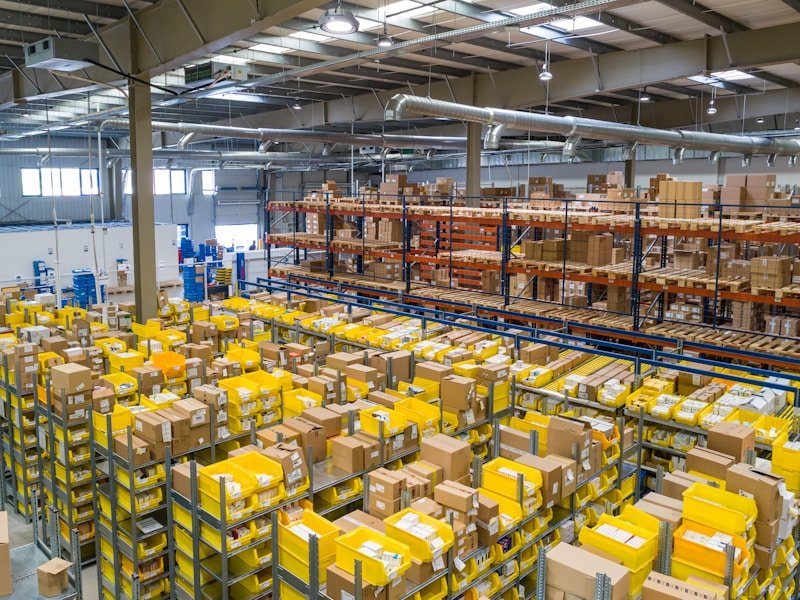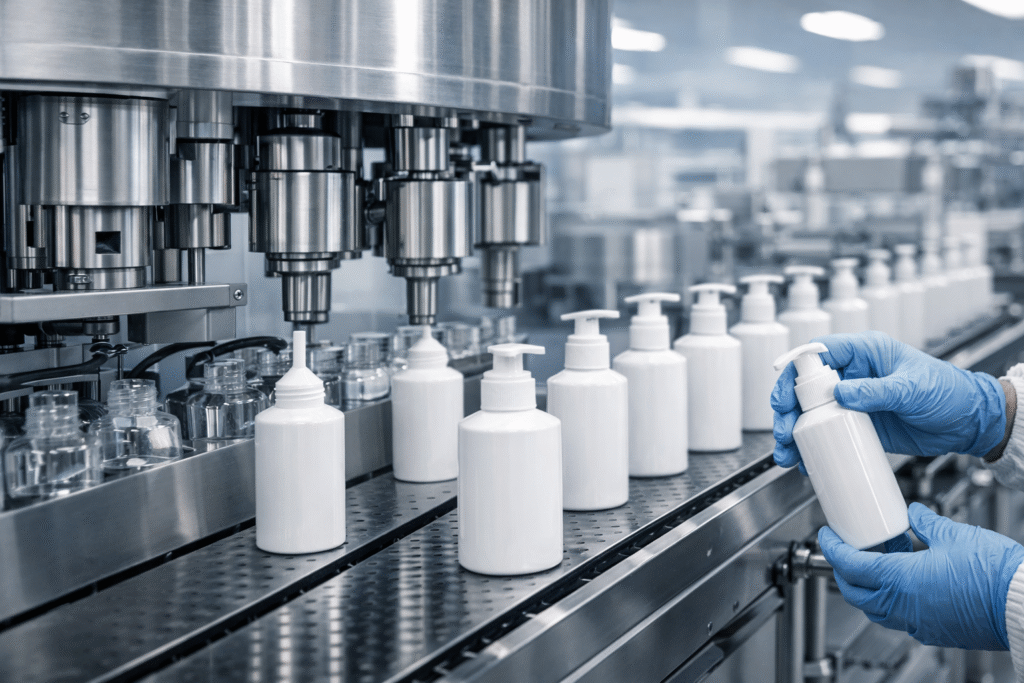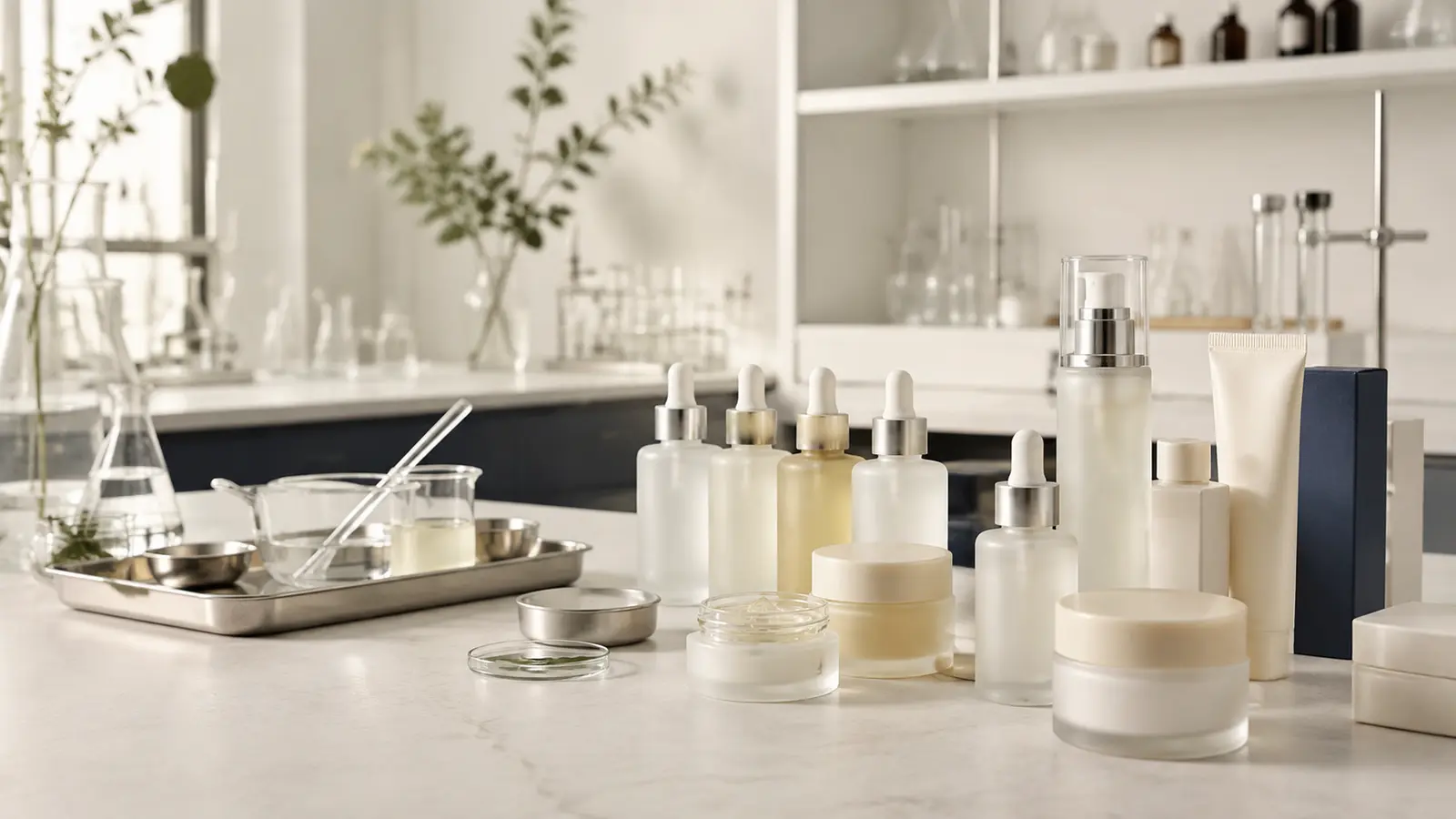
Yes, it is possible to start some Korean private-label skincare projects at approximately 1,000 units per SKU. But a 1,000-unit project usually works only when the product, formula and packaging are structured for a small production run. It should not be confused with a fully custom OEM/ODM project in which every component is developed from zero.
For an emerging brand, the real question is not simply, “Can I find a low MOQ Korean skincare manufacturer?” It is: What level of customization can I realistically achieve at 1,000 units without creating hidden packaging costs, delays or compliance problems?
Quick Answer: What Is Realistic at 1,000 Units?
| Project element | Usually realistic at around 1,000 units | More likely to require a higher MOQ |
|---|---|---|
| Formula | Existing or manufacturer-owned base formula | Fully new formulation with unusual actives |
| Packaging | Stock bottle, jar or tube already available in Korea | Custom mold, exclusive component or imported packaging |
| Decoration | Label, simple printing or standard folding carton | Complex coating, multiple finishes or custom tooling |
| Number of SKUs | One focused hero product | Several products, shades or fragrances at once |
| Development goal | Fast, controlled market entry | Maximum product differentiation |
The exact minimum still depends on the manufacturer, product category, filling line, packaging supplier and target market. An MOQ advertised online is therefore a starting point—not a complete production plan.
Why Do Some Korean Manufacturers Start at 1,000 Units While Others Require 5,000?
Korean cosmetics manufacturing is not one uniform market. Large ODM companies, mid-sized export manufacturers and smaller private-label specialists operate with different production equipment, R&D models and commercial priorities.
A manufacturer may accept approximately 1,000 units when it can use an existing formula, a compatible production line and readily available packaging. A more complex project may begin at 5,000 units or higher because the factory must purchase raw materials, schedule a larger content batch, set up filling equipment and coordinate packaging components made by separate suppliers.
This is why two Korean manufacturers can quote very different MOQs for what appears to be the same serum or cream.
The Three MOQs Behind a Korean Skincare Project
Many first-time founders look only at the factory’s finished-product MOQ. In practice, a launch can be controlled by three different minimum quantities.
1. Formula or Production MOQ
This is the minimum batch the manufacturer can mix, fill and quality-check efficiently. Existing formulas are generally easier to accommodate in a small run because the raw materials and production process are already established.
2. Primary Packaging MOQ
The bottle, pump, dropper, tube or jar may come from a separate packaging supplier. A factory may agree to fill 1,000 units while the selected component supplier requires a larger purchase. Choosing a stock component already available through the manufacturer can prevent this mismatch.
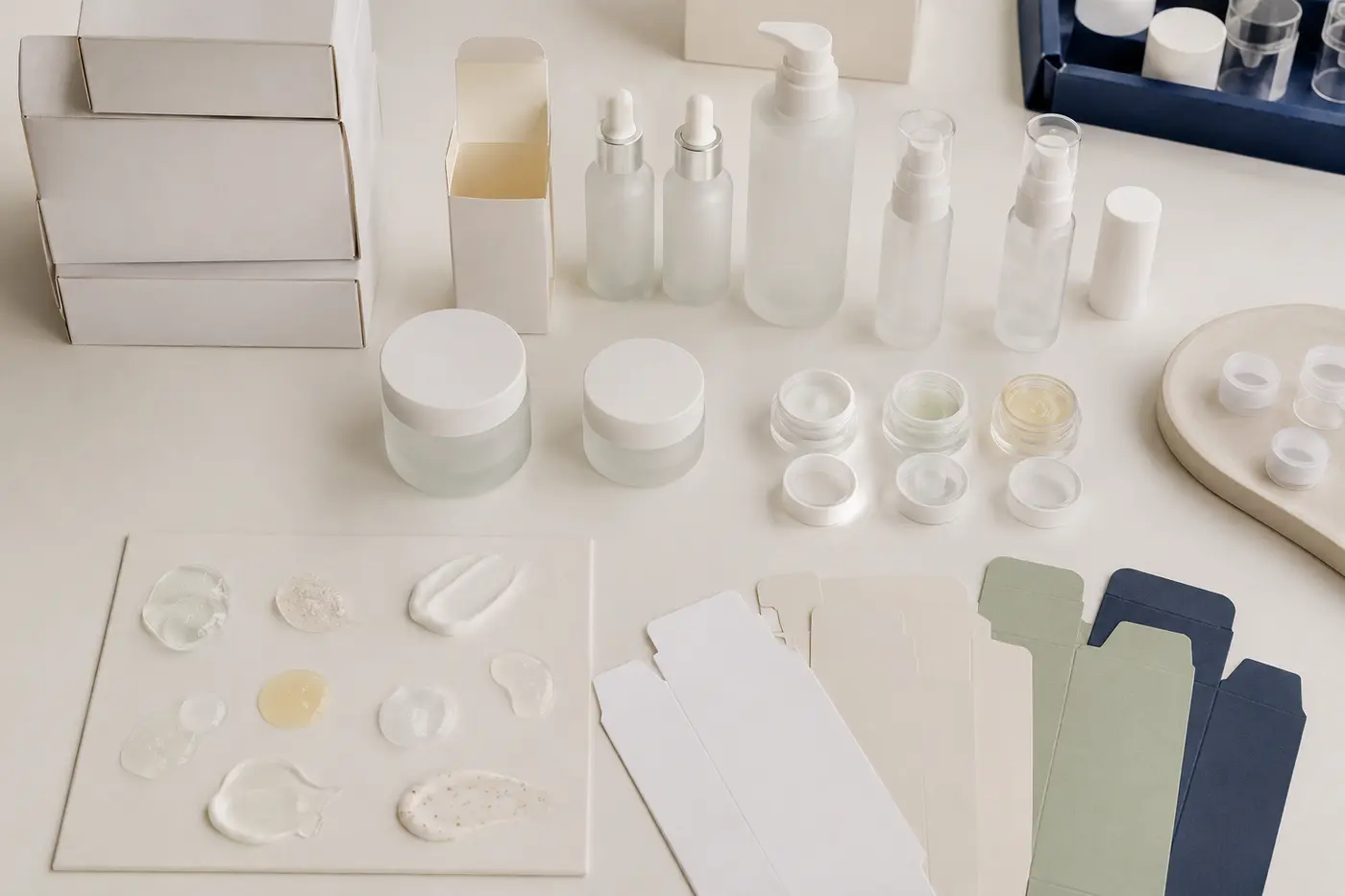
3. Printing and Secondary Packaging MOQ
Labels, direct printing, cartons, inserts and special finishes each have their own setup requirements. At a low volume, a simple label and standard carton may be commercially sensible, while custom printing methods can increase both the minimum purchase and unit cost.
The effective MOQ is usually determined by whichever of these three elements has the highest minimum.
What Can You Customize in a 1,000-Unit Project?
Low MOQ does not necessarily mean placing your logo on a generic product with no brand direction. Meaningful customization may still be possible, but the project must prioritize the elements consumers actually notice.
- Selecting an existing formula that matches your target skin concern
- Choosing from available textures, scents or fragrance-free options
- Selecting compatible stock packaging
- Creating your own label and carton design
- Developing market-appropriate product positioning and usage instructions
- Reviewing ingredient and documentation suitability for the target country
What is usually harder at this scale is developing a completely new formula with multiple specialty ingredients, creating a proprietary bottle mold or launching several SKUs simultaneously. Those requests can be technically possible but commercially inefficient at 1,000 units.
Private Label, Semi-Custom or Full Custom?
| Development model | How it works | Best fit |
|---|---|---|
| Private label | Existing formula with brand-specific packaging and artwork | First launch, market testing and faster entry |
| Semi-custom | Existing base adjusted within the manufacturer’s feasible range | Brands needing moderate differentiation |
| Full custom OEM/ODM | Formula and product specifications developed around a new brief | Established brands with higher volume and development budget |
A first-time founder often gets a better commercial result by launching one well-positioned private-label hero product than by forcing a fully custom formula into an unrealistic small-batch budget.
Which Products Are Better Suited to Low MOQ Manufacturing?
Feasibility changes by manufacturer and category, but straightforward skincare formats using established filling and packaging systems are generally easier to evaluate for a 1,000-unit launch. Examples may include selected serums, creams, cleansers, toners, mists and body-care products.
Products involving specialized equipment, regulated claims, custom shapes, unusual applicators or high packaging minimums require separate feasibility checks. Sunscreen, color cosmetics and individually packed products should never be assumed to follow the same MOQ as a standard serum or cream.
If you are considering hydrogel patches, see our guide to launching a private-label hydrogel eye patch line in Korea.
Why a 1,000-Unit MOQ Does Not Mean a Low Total Launch Budget
MOQ only describes the minimum quantity. Your total investment can also include samples, formula adjustments, packaging artwork, printing setup, testing, market-specific compliance work, freight, duties and local registration or notification.
Low-volume production also has fewer units over which to spread fixed setup costs. This means the unit price is normally higher than it would be at 5,000 or 10,000 units. Before selecting a manufacturer, calculate the maximum landed cost that your retail price and distribution model can support.
For a wider cost breakdown, read How Much Does It Really Cost to Manufacture Skincare in Korea?
A Smarter 1,000-Unit Launch Strategy
- Launch one SKU first. Concentrate development, packaging and marketing resources on a clear hero product.
- Define the target market before sampling. Ingredient, label and documentation expectations differ between countries.
- Use a proven base formula when appropriate. Differentiate through positioning, texture selection, packaging and customer experience.
- Choose stock packaging early. Confirm component availability before finalizing the artwork.
- Set a realistic landed-cost target. Include compliance, freight and import costs—not only the factory price.
- Plan the next production tier. A 1,000-unit run should test demand and prepare the brand for a larger reorder.
When Is 5,000 Units the Better Decision?
Starting with 5,000 units may make more sense when you need a newly developed formula, stronger ingredient differentiation, more packaging freedom or a lower unit cost. It may also be appropriate when you already have proven sales, confirmed retail distribution or a launch campaign capable of moving inventory.
Reducing the order quantity is not always the best way to reduce risk. In some cases, launching fewer SKUs at a commercially workable quantity produces a stronger brand and a healthier margin than launching several highly compromised small batches.
How K-Beauty Bridge Supports Low MOQ Projects
K-Beauty Bridge is a Korea-based product development and manufacturing partner for overseas beauty brands. We do not treat every 1,000-unit request as automatically feasible. We first assess the product category, customization level, packaging, target market, budget and launch timing.
When a project fits a low-MOQ pathway, we help structure the brief, evaluate suitable Korean manufacturing options, coordinate sampling and packaging decisions, and manage communication locally. When the requested concept requires a higher quantity, we explain the constraint before the brand invests in unnecessary development work.
Frequently Asked Questions
Can every skincare product be manufactured in Korea at 1,000 units?
No. Availability depends on the product type, formula, packaging, manufacturer and target market. A standard serum in stock packaging may be suitable, while sunscreen or a product requiring a custom applicator may need a higher MOQ.
Can I create a completely custom formula at 1,000 units?
Sometimes limited adjustments are possible, but a fully new formula is less likely to be commercially efficient at this volume. An existing or semi-custom formula is normally the more realistic starting point.
Can I launch several products with 1,000 units in total?
MOQ is normally calculated per SKU, not across the whole product line. Three different products may therefore require three separate production minimums.
Does the manufacturer handle US or EU compliance?
Manufacturers can provide production and formula documentation, but the brand or designated Responsible Person retains important market-specific obligations. Confirm the required documents and responsible parties before approving the formula and label.
How do I know whether my project is suitable for 1,000 units?
Prepare your product category, target market, preferred formula approach, packaging expectations, budget and launch date. These details allow a Korean manufacturing partner to assess feasibility without relying on a misleading headline MOQ.
Planning Your First Korean Skincare Product?
If you are considering an initial order of approximately 1,000 units, tell us your product category, target market, packaging preference and launch timeline. We will assess whether a low-MOQ Korean manufacturing pathway is realistic for your project.
About the author: Anna Kim is the founder of K-Beauty Bridge, a Korea-based product development and manufacturing partner supporting overseas beauty brands through Korean OEM/ODM projects.